
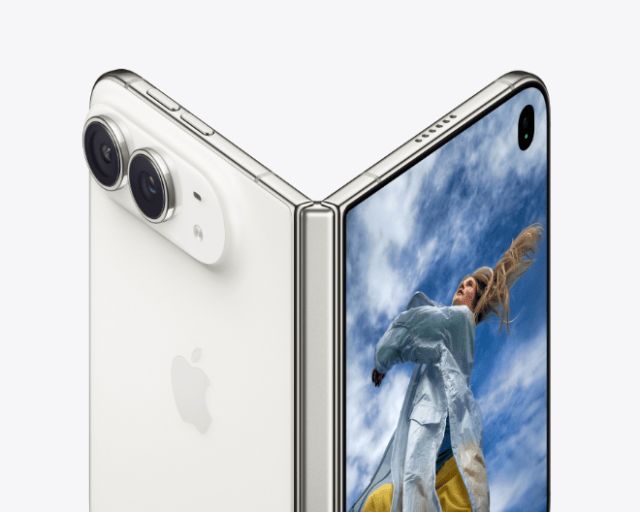
With the iPhone Duo, Apple has entered the foldable smartphone market years after Samsung, Google, Huawei, and others, and it is doing so with a $1,999 book-style device designed less as a novelty and more as a bid to change what mainstream buyers expect from a phone. The iPhone Duo, unveiled September 9th, folds from a compact 5.4-inch outer display into a 7.6-inch inner screen — Apple’s largest iPhone display yet — while keeping the same aspect ratio on both panels. Closed, it is roughly passport-shaped. Opened, Apple says it is the company’s thinnest iPhone at 5.2 millimeters. Preorders begin October 16th, with stores getting the device on October 23rd. That timing and price put the Duo in the same neighborhood as Samsung’s Galaxy Z Fold 8 and Google’s latest Pixel foldable, rather than in a category of its own. Foldables still account for only a sliver of global smartphone shipments. The question hanging over the launch is whether Apple’s combination of hardware polish, iOS software and ecosystem pull can expand that niche. As Bloomberg News’ Edward Ludlow writes, that is precisely the test Apple is setting for itself: whether the Duo can shift consumer tastes, not merely win over people who already buy folding phones. Apple spent years studying the complaints that have kept foldables on the fringe — visible creases, fragile hinges, awkward software and devices that feel like two phones taped together. The company is pitching a titanium hinge with more than 100 precision parts, a nano-texture finish meant to make the crease less noticeable, IP68 dust and water resistance, and an iOS experience built around split apps, fluid open-and-close transitions and later Apple Pencil support. New CEO John Ternus has called the Duo the most transformational change to iPhone since the original, arguing that hardware and software engineered together can redefine what a foldable is for. Marketing chief Greg Joswiak has been blunter about rivals: existing foldables, in Apple’s view, were not particularly inspiring. The compromises are still visible. The Duo is heavier than some Android competitors. It uses a side-button Touch ID rather than Face ID, drops a physical SIM slot and lacks the variable-aperture camera of the iPhone 18 Pro models. Higher storage configurations climb well above $2,000. Those trade-offs make the first Duo look like a halo product — a statement device for early adopters and Apple loyalists rather than an immediate volume seller. Analysts and industry veterans have long argued that new form factors often need two or three generations before they become mass-market. Apple’s bet is that its installed base, developer influence, and reputation for finishing products can compress that timeline. If the Duo works, Ludlow writes, it will not just give Apple a new high-end SKU. It will signal that foldables have left the enthusiast ghetto. If it remains a pricey curiosity, the category will stay what it has been for most of the past seven years: impressive, expensive and still waiting for the mainstream. Support MacDailyNews at no extra cost to you by using this link to shop at Amazon. The post Apple’s iPhone Duo could finally make foldable phones mainstream appeared first on MacDailyNews. You're currently a free subscriber to MacDailyNews. For the full experience, upgrade your subscription.
|




No comments:
Post a Comment