MacDailyNews presents live notes from Apple’s Q226 Conference Call with analysts starting at 2pm PDT / 5pm EDT today, April 30, 2026.
This stream is best experienced on an iPhone 7 or later, iPad (5th generation or later), or iPod touch (7th generation) using Safari on iOS 12 or later; or a Mac using Safari on macOS Mojave 10.14 or later. Streaming to your TV requires an AirPlay 2–capable device, or via AirPlay to an Apple TV (2nd generation or later) with the latest Apple TV software or tvOS. Other platforms may also be able to access the stream using recent versions of Chrome, Firefox, or Microsoft Edge (MSE, H.264, and AAC required).
Apple’s live conference call webcast will begin at 2pm PDT / 5pm EDT here.
Apple today posted record second quarter revenue of $111.2 billion, up a whopping 17% year over year, and quarterly diluted earnings per share (EPS) of $2.01, up a staggering 22% year over year.
According to LSEG consensus estimates compiled from Wall Street analysts called for Apple to post revenue of $109.5 billion and EPS of $1.95.
Apple today announced financial results for its fiscal 2026 second quarter ended March 28, 2026. The Company posted quarterly revenue of $111.2 billion, up 17 percent year over year. Diluted earnings per share was $2.01, up 22 percent year over year.
“Today Apple is proud to report our best March quarter ever, with revenue of $111.2 billion and double-digit growth across every geographic segment,” said Tim Cook, Apple’s CEO. “iPhone achieved a March quarter revenue record, fueled by such extraordinary demand for the iPhone 17 lineup. During the quarter, Services achieved yet another all-time record, and we were excited to introduce remarkable new products to our strongest lineup ever. That included the addition of the iPhone 17e and the M4-powered iPad Air, along with the launch of MacBook Neo, which is captivating customers all around the world.”
“Our strong business performance during the March quarter generated over $28 billion in operating cash flow and drove new March quarter records for both operating cash flow and EPS,” said Kevan Parekh, Apple’s CFO. “Continued strong customer demand for our products and services once again helped us achieve a new all-time high for our installed base of active devices across all major product categories and geographic segments.”
Apple’s board of directors has declared a cash dividend of $0.27 per share of the Company’s common stock, an increase of 4 percent. The dividend is payable on May 14, 2026, to shareholders of record as of the close of business on May 11, 2026. The board of directors has also authorized an additional program to repurchase up to $100 billion of the Company’s common stock.
Apple will provide live streaming of its Q2 2026 financial results conference call beginning at 2:00 p.m. PT on April 30, 2026, at apple.com/investor/earnings-call. The webcast will be available for replay for approximately two weeks thereafter.
According to consensus estimates tracked by FactSet, prior to earnings, Apple was expected to post adjusted earnings per share (EPS) of $1.95 and revenue was projected at $109.5 billion. Analyst forecast iPhone revenue of $56.5 billion and Mac sales were expected to come in at $8.12 billion. Greater China was projected at $19 billion. MacDailyNews Take:
MacDailyNews Note: We’ll have live notes from Apple’s conference call starting at 2:00 p.m. PDT / 5:00 p.m. EDT.
Please help support MacDailyNews — and enjoy subscriber-only articles, comments, chat, and more — by subscribing to our Substack: macdailynews.substack.com. Thank you!
Satellite connectivity in smartphones is entering a critical growth phase, with Non-Terrestrial Network (NTN)-capable devices projected to account for 46% of global smartphone shipments by 2030, according to Counterpoint Research’s latest Smartphone Satellite Connection Report.
Satellite connectivity in smartphones is entering a critical growth phase, with Non-Terrestrial Network (NTN)-capable devices projected to account for 46% of global smartphone shipments by 2030, according to Counterpoint Research’s latest Smartphone Satellite Connection Report. Proprietary solutions will drive the market in the near term as 3GPP NTN faces challenges around chipset readiness, operator certification and service maturity.
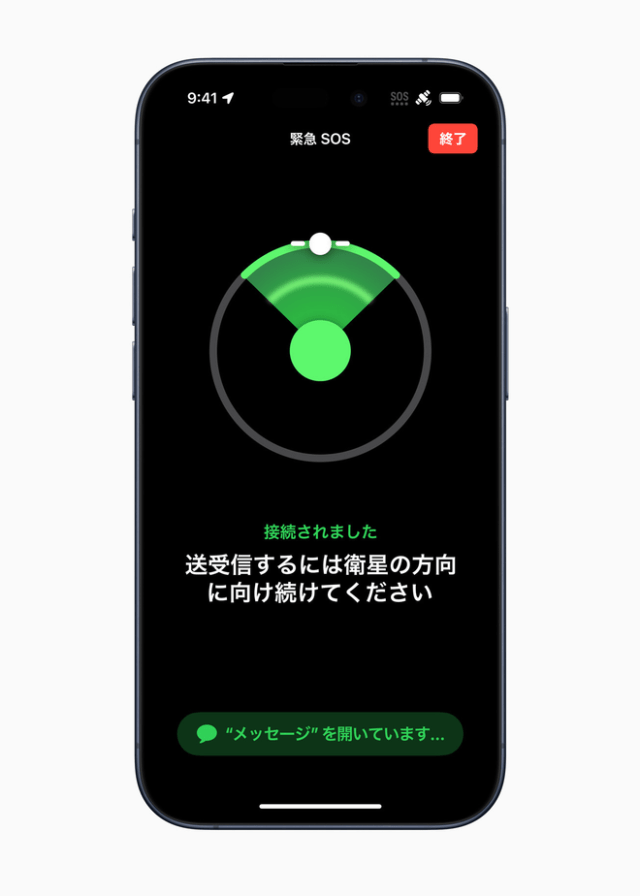
Apple was the first mainstream smartphone brand to offer satellite connectivity by partnering with Globalstar for the iPhone 14 in 2022. The recent acquisition of Globalstar by Amazon provides immediate scale and opens up a new revenue stream for Amazon around connectivity-as-a-service. Huawei was the second player to bring satellite connectivity to smartphones in 2023, and now more than 10 brands are offering it in smartphones.
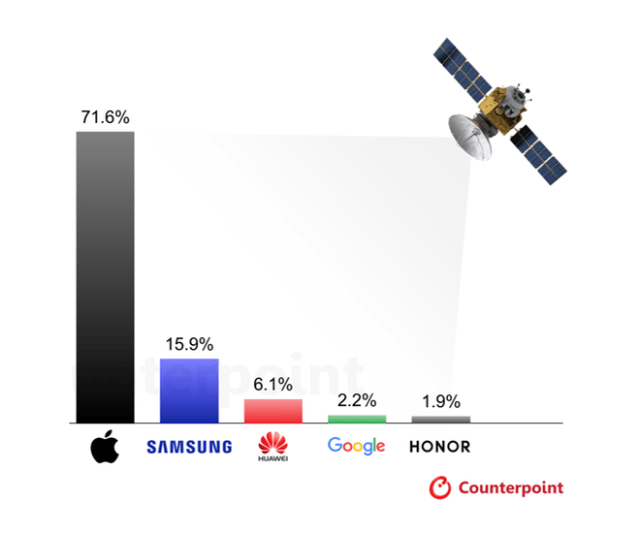
Source: Counterpoint Research Global Satellite Smartphone Shipment Tracker, April 2026
Commenting on the smartphone OEM dynamics, Principal Analyst Soumen Mandal said in a statement, “Apple remains the leading smartphone OEM in terms of NTN-capable smartphone shipments, while Samsung leads the Android ecosystem. Similar to Apple, Huawei and Google follow the proprietary NTN approach. Other Android players, including Samsung, Xiaomi, OPPO, HONOR and vivo, have aligned with 3GPP NTN to enable broader scalability and interoperability.”
The satellite smartphone market is mostly driven by the premium segment, but the lack of killer use cases is limiting mass adoption. 3GPP Release 17-based use cases are limited to SOS and messaging. While 3GPP Release 18 will help further adoption across brands in the premium segment, mass adoption in the mid-price segment is expected only with Release 19.
Commenting on the satellite smartphone SoC market competitive landscape, Senior Analyst Shivani Parashar said in a statement, “Qualcomm has been at the forefront among Android chipset players in enabling satellite connectivity through its Snapdragon X80 and X85 modems, followed by Huawei, Google and Samsung. MediaTek is also advancing NTN integration through its MT6825 5G SoC. More participation from chipset players will increase competition while potentially helping scalability.”
The partnerships entered into by North American telecom players, such as T-Mobile with SpaceX, AT&T with AST Mobile and Rogers with SpaceX, along with Apple’s tie-up with Globalstar, have helped bring satellite connectivity to smartphones, making North America an early leader in the field. Though telecom operators in other regions, like Europe and China, are not rushing to offer satellite connectivity, satellite operators are increasing capacity to cater to the mass market.
Commenting on the satellite smartphone market outlook, Research Vice President Peter Richardson said in a statement, “Nearly one in two smartphones is expected to support satellite connectivity by 2030. Apple, Google and Samsung will lead in terms of overall penetration, but Android brands targeting the entry and mid-price segments will see less penetration. Satellite offerings by more Android players and telecom operators beyond developed markets will play a key role in accelerating global adoption.”
The satellite smartphone connectivity space is expected to create opportunities across the entire ecosystem, including smartphone OEMs, SoC vendors, component players, telecom operators and satellite operators. Beyond this, it will also unlock new service models and bundled offerings, where companies like Amazon could integrate satellite connectivity into platforms such as Amazon Prime to enhance the overall consumer experience. However, the pace of growth will depend on the collaboration of ecosystem players to solve issues such as design and cost constraints, limited use cases, regulatory complexities and network immaturity, Counterpoint says.
MacDailyNews Take: Even though Apple picked the wrong satellite communications partner, the strength of iPhone and the first-mover advantage spell total domination.
iPhone’s ecosystem power, software polish, and sheer volume turn even a “suboptimal” satellite tie-up into market-crushing dominance. With Amazon now stepping in via Globalstar, Apple’s moat will only widen.
Never bet against the iPhone. Strength, timing, and execution beat “perfect” partnerships every single time.
Please help support MacDailyNews — and enjoy subscriber-only articles, comments, chat, and more — by subscribing to our Substack: macdailynews.substack.com. Thank you!