
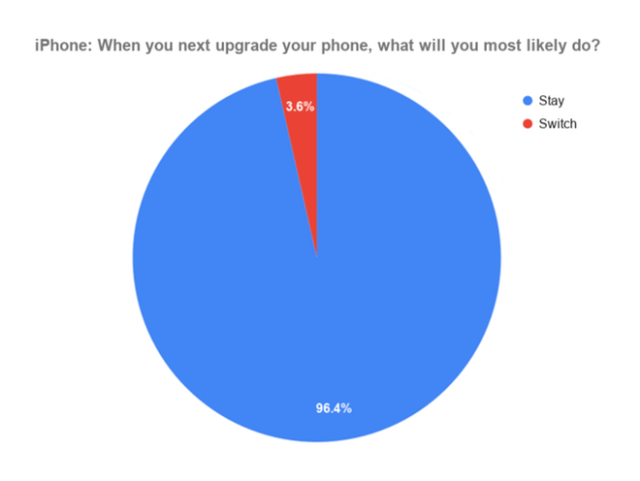
In the ever-competitive world of smartphones, loyalty speaks volumes about which platform truly wins hearts (and wallets). According to the latest Smartphone Loyalty Survey 2026 from SellCell, iPhone users continue to demonstrate remarkable dedication to Apple’s ecosystem, while Android users show significantly higher churn rates. The survey, which polled over 5,000 U.S. smartphone users aged 18 and older with roughly equal representation of iPhone and Android owners, reveals striking differences in switching intentions. iPhone loyalty hits a new high iPhone loyalty now stands at an impressive 96.4%, up from 91.9% in 2021 and 90.5% in 2019. That means only 3.6% of iPhone users plan to switch brands on their next upgrade — a notable decline from previous years. In contrast, Android loyalty sits at 86.4%, with 13.6% of users intending to switch. This makes Android users nearly four times more likely to jump ship than their iPhone counterparts (13.6% vs. 3.6%). The loyalty gap between the two platforms has widened to a full 10 percentage points. These numbers underscore a clear trend: once someone chooses an iPhone, they tend to stick with it. A remarkable 83.8% of iPhone users have been with Apple for more than five years — nearly 2.5 times higher than the 33.8% of Android users who can say the same. iPhone owners aren’t just loyal; they’re long-term loyal. Why iPhone users stay (and why some Android users leave) When asked why they plan to stick with their current phone, the top reasons for iPhone users were: • 60.8% simply prefer Apple Together, brand preference and ecosystem lock-in account for over 78% of loyalty drivers among iPhone owners. For Android users who stay, brand preference (58.0%) and never having issues (23.5%) top the list. However, the higher switching intent tells a different story. Among those planning to switch from Android, the top drivers include better value from other brands (31.8%), better technology (27.1%), and simply wanting a change (23.5%). Notably, 11.5% of switching Android users cited preferring iOS/Apple as their reason. Where switchers are headed If iPhone users do switch, the vast majority (69.7%) are eyeing Samsung, followed by Google Pixel at 20.2%. Android users considering a move show more split intentions: 31.5% would go to another Samsung device, but a healthy 26.8% plan to switch to an iPhone, with Google Pixel also drawing 21.2%. The bigger picture The 2026 survey shows loyalty improving across the board compared to 2021, with switching rates at their lowest levels in years. Yet the gap between iPhone and Android remains pronounced. iPhone users aren’t just satisfied — they’re deeply invested in the seamless experience, privacy, and ecosystem that Apple has perfected over time. For Android, while brands like Samsung (90.1% loyalty) and Google (86.8% loyalty) have made gains, the platform as a whole still sees far more fluidity. In an industry where retaining customers is often more valuable than acquiring new ones, these results highlight iPhone’s enduring strength. Apple’s focus on quality, ease of use, and ecosystem integration continues to create users who don’t just buy an iPhone — they commit to the platform for the long haul. If you’re an iPhone user, these numbers probably come as no surprise. And if you’ve settled for Android and you’re thinking about your next upgrade… well, the data suggests you might want to give iOS a closer look. MacDailyNews Take: We were concerned that 3.6% of U.S. iPhone users had incurred severe brain damage, but the study points out that these poor souls are just cheap or deluded that Android is cheaper (it’s not*); 24.7% said iPhones are too expensive, 25.8% believe they can find a better value elsewhere. *While some perceive iPhones as premium-priced, numerous Total Cost of Ownership (TCO) and resale value studies show that iPhones are often the less expensive option over time. Thanks to significantly higher resale and trade-in values, the effective net cost per year for an iPhone is frequently lower than for comparable Android flagships. iPhones consistently retain 60–70% of their original value after two years, while many Android devices drop to around 30–50% (with top Samsung models performing better but still trailing). After just one year, an average Android might retain only ~43% of its value, compared to ~69% for an iPhone. That means when it’s time to upgrade or trade in, iPhone owners recover far more of their investment — dramatically lowering the true long-term cost. This stronger value retention, combined with longer software support and sustained performance, helps explain why so many iPhone users stay committed despite the higher upfront price tag. The data shows that what looks like a more expensive phone on day one often delivers better economics over the full ownership cycle. Support MacDailyNews at no extra cost to you by using this link to shop at Amazon. The post U.S. Android users are nearly four times more likely to switch than iPhone users appeared first on MacDailyNews. You're currently a free subscriber to MacDailyNews. For the full experience, upgrade your subscription.
|




No comments:
Post a Comment