
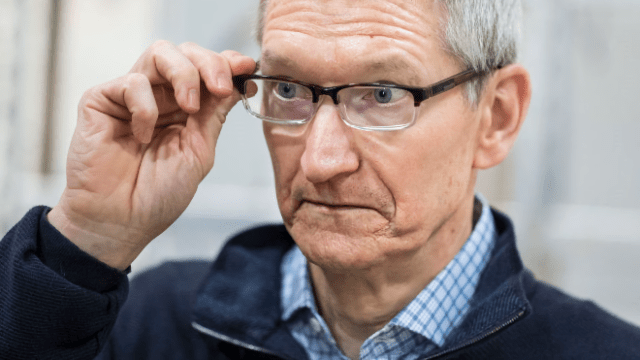
As Tim Cook transitions out of the CEO role, it’s natural to look back at his long tenure at Apple — a period marked by extraordinary financial success, operational excellence, and the company’s rise to the world’s most valuable corporation. Yet one notable misstep stands out for its poor judgment and lasting reputational cost. In August 2017, following the violent clashes in Charlottesville, Virginia, Apple CEO Tim Cook rushed to respond. He sent an internal memo condemning the events, criticized President Trump’s handling of the situation, and committed $2 million in corporate donations: $1 million each to the Anti-Defamation League (ADL) and the Southern Poverty Law Center (SPLC). Apple also matched employee contributions and enabled direct donations via iTunes. Cook declared that “hate is a cancer,” positioning the move as a stand for decency. The murder of Heather Heyer, a counter-protester killed when a white supremacist drove his car into a crowd, was indefensible — a brutal and senseless act of violence that deserved universal condemnation regardless of politics. Few dispute the need to denounce neo-Nazis and actual white supremacists who marched with torches and committed such murder. But Cook’s decision to funnel significant funds to the SPLC and the ADL—both controversial organizations known for expansive and partisan “hate” labeling — was a profound error in judgment. The ADL, in particular, has faced growing criticism for conflating legitimate criticism of Israeli policies with antisemitism and for its overly broad influence on tech censorship and campus speech. It aligned one of the world’s most valuable and ostensibly neutral companies with outfits whose methods have long drawn criticism from across the ideological spectrum. Nine years later, that mistake looks even worse in light of Tuesday’s bombshell development: on April 21, 2026, a federal grand jury in Montgomery, Alabama, indicted the SPLC on 11 counts of wire fraud, false statements to a federally insured bank, and conspiracy to commit money laundering. The SPLC’s Deepening Troubles The SPLC began with creditable work suing violent Klan factions decades ago. But it evolved into a well-funded machine that brands mainstream conservative and Christian organizations (such as the Family Research Council or Alliance Defending Freedom) as equivalent to neo-Nazis, often with little regard for nuance or evidence. This tactic has chilled legitimate debate, influenced tech deplatforming decisions, and sustained a large endowment through fear-based fundraising. Longstanding critiques from former employees, investigative journalists, and even some on the left highlighted inflated threats, internal dysfunction (including the 2019 ouster of co-founder Morris Dees amid misconduct allegations), and settlements paid after wrongful labeling. The organization’s “hate map” has been treated as authoritative by media and corporations despite these flaws. Tuesday’s indictment, announced by Acting Attorney General Todd Blanche and FBI Director Kash Patel, adds a far more serious layer. Prosecutors allege that between 2014 and 2023, the SPLC secretly funneled more than $3 million in donated funds to paid informants deeply embedded in extremist groups — including the Ku Klux Klan, Aryan Nations, National Socialist Party of America, and others. The indictment claims these individuals not only received payments but actively promoted the very racist groups the SPLC publicly denounced on its website and in fundraising appeals. Funds were allegedly routed through multiple bank accounts and loaded onto prepaid cards, all while deceiving donors about how their money was being used. The SPLC has defended the payments as standard informant work shared with law enforcement and vowed to fight the charges, calling them politically motivated. Yet the scale and secrecy alleged raise fundamental questions about whether the group was monitoring hate — or, as critics now charge, sustaining a revenue-generating cycle of manufactured threat. This alleged conduct overlaps with and extends well beyond 2017, when Tim Cook inexplicably chose the SPLC as a partner in Apple’s stand against “hate.” A Partisan Overreaction Then, Even More Questionable Now Charlottesville was a genuine tragedy marked by fringe extremism and street violence from multiple directions. Trump’s response was clumsy, but the elite consensus, including Cook’s memo, often ignored asymmetries in how media and institutions treated left- and right-wing violence. Even Snopes, hardly a right-wing outlet, rated as False the widespread claim that Trump had called neo-Nazis and white supremacists “very fine people.” In a June 2024 article titled “No, Trump Did Not Call Neo-Nazis and White Supremacists ‘Very Fine People'”, Snopes noted that Trump explicitly condemned those groups while referring to non-extremist participants on both sides of the statue debate. In that heated moment, Cook opted for knee-jerk corporate virtue signaling rather than measured condemnation of violence on all sides or support for neutral causes like local victim relief or genuine civil rights work. By directing funds and Apple’s platform to both the SPLC and the ADL, he lent the company’s immense prestige to organizations already viewed by many as partisan actors rather than neutral watchdogs. The April 21, 2026 indictment underscores how flawed that choice was. If even a fraction of the allegations hold — that donor money meant to fight extremism was instead quietly propping up elements within those groups — it reveals a level of institutional deception that makes the 2017 donation look not just naïve, but actively irresponsible. In recent years, Cook has largely refrained from such high-profile political pronouncements, emphasizing instead that he focuses on “policy, not politics” and positioning himself as non-partisan in his dealings with administrations on both sides. This shift only highlights how unnecessary and damaging Cook’s 2017 overreaction has proven to be. Apple’s customers span the political spectrum. Its products are tools for communication and creation, not ideological weapons. Associating the brand so explicitly with groups now facing serious questions about bias, overreach, and — in the SPLC’s case — federal fraud charges tied to the very “hate” they claim to combat erodes trust. It fuels perceptions that Silicon Valley elites apply selective outrage, partnering with flawed proxies while lecturing others on morality. The Broader Lesson for Corporate Leadership Tim Cook has been an effective steward of Apple’s operations, innovation pipeline, and financial performance. But episodes like this expose a recurring vulnerability: reflexive alignment with progressive institutional consensus during cultural flashpoints. True leadership demands discernment — condemning real hatred and violence without outsourcing judgment to self-interested arbiters with their own agendas. Of course, hate is destructive, but so is the cynical inflation of “hate” labels, secretive funding schemes, and the erosion of public trust in once-respected nonprofits. In hindsight, Cook’s post-Charlottesville move stands as one of his bigger mistakes. Writing a $2 million check to the SPLC and ADL in 2017 wasn’t moral courage; it was panic-driven virtue signaling to the wrong partners. With Tuesday’s indictment, that error is now impossible to ignore. Companies like Apple best serve their shareholders, employees, and global customers by focusing on exceptional products and staying above the fray, not by impulsively picking sides with organizations whose own credibility is collapsing under the weight of serious criminal allegations and longstanding accusations of bias. SteveJack is a long-time Macintosh user, web designer, multimedia producer, and contributor to the MacDailyNews Opinion section. In a nutshell, Cook literally funded inequality and disrespect in the name of Apple Inc. See also: Apple-backed Southern Poverty Law Center wracked in turmoil, called a ‘con’ for ‘bilking gullible liberals’ – March 24, 2019 Support MacDailyNews at no extra cost to you by using this link to shop at Amazon. The post One of Tim Cook’s bigger mistakes: Overreacting to Charlottesville and handing $2+ million to the SPLC and ADL appeared first on MacDailyNews. You're currently a free subscriber to MacDailyNews. For the full experience, upgrade your subscription.
|




No comments:
Post a Comment