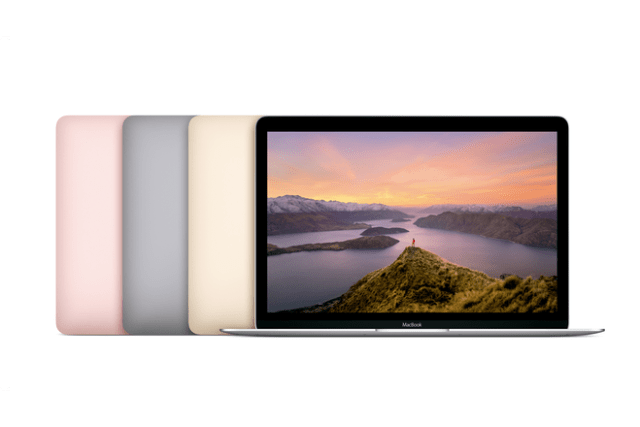
Apple is reportedly preparing to introduce a new, more affordable MacBook model in the coming days, marking a significant shift in its laptop lineup by using an iPhone-derived A18 Pro processor instead of the traditional M-series Apple silicon. This entry-level device aims to target budget-conscious consumers, students, and first-time Mac buyers with a lower price point, but recent leaks reveal several means Apple has chosen to achieve that affordability. According to multiple reports citing a code leak from an internal macOS Tahoe beta (Kernel Debug Kit) that surfaced last year, the upcoming MacBook will be powered by the A18 Pro chip — the same high-performance processor found in the iPhone 16 Pro models — rather than a dedicated M-series chip. This move is expected to help drive down production costs while still delivering solid performance for everyday tasks like web browsing, document editing, streaming, and light productivity. CPU Performance The A18 Pro features a 6-core CPU configuration: 2 high-performance “Everest” cores clocked up to around 4.05 GHz and 4 efficiency “Sawtooth” cores at about 2.42 GHz. In Geekbench 6 benchmarks (from iPhone 16 Pro testing), it typically scores: • Single-core: ~3,400–3,500 (averages around 3,450–3,460 across many samples) • Multi-core: ~8,500–8,900 (commonly 8,500–8,600) This makes it significantly faster in single-threaded tasks than the original M1 chip (which scored ~2,300–2,400 single-core in comparable Geekbench versions) — often by 40–50% or more. Everyday responsiveness, such as app launching, web browsing, scrolling through documents, or light multitasking, would feel noticeably snappier and more fluid than on a 2020 M1 MacBook Air. In multi-core workloads (e.g., exporting videos, compiling code, or running multiple apps), it competes with or slightly trails the M1 (~8,300–8,500 multi-core), depending on thermal constraints. The A18 Pro’s 3nm process node gives it excellent power efficiency, potentially allowing better sustained performance in a fanless MacBook chassis with lower heat output than older designs. It falls short of M2 or M3 chips in heavy parallel tasks due to fewer cores (6 vs. 8+ in M-series), but it matches or approaches M1-level multi-core in short bursts. GPU and Graphics The A18 Pro includes a 6-core GPU with hardware-accelerated ray tracing. While Apple’s M-series GPUs generally have higher core counts and better memory bandwidth for laptop use, the A18 Pro’s GPU performs comparably to the original M1’s 7/8-core GPU in many tests — sometimes edging it out in efficiency-focused scenarios or even beating it in specific graphics benchmarks. For casual gaming, photo/video editing in apps like Photos or iMovie, streaming, and everyday UI rendering, it should handle 1080p/4K content smoothly without major issues. Demanding 3D rendering, pro-level video editing (e.g., Final Cut Pro with complex timelines), or high-end gaming would show limitations compared to M2/M3/M4 MacBooks. Neural Engine and AI/ML TasksWith a 35 TOPS Neural Engine (NPU), the A18 Pro excels in on-device AI features — think Apple Intelligence tasks, image processing, voice recognition, or machine learning workloads in apps. This would make it feel very modern in 2026, potentially outperforming older M1 MacBooks in AI-accelerated features while running macOS Tahoe 26.x efficiently. Real-World Expectations in a MacBook In a rumored low-cost MacBook (likely with 8GB RAM, limited thermal headroom, and no active cooling), expect: • Excellent for everyday use: Web browsing (multiple tabs), email, productivity apps (Pages, Numbers, Microsoft Office), video streaming (Netflix, YouTube at 4K), light photo editing, and casual FaceTime/Zoom calls. Single-core snappiness would make macOS feel quick and responsive. • Solid for moderate creative work: Basic video editing, podcasting, or light coding — better than many budget Windows laptops in efficiency and ecosystem integration. • Adequate but limited for pro tasks: Heavy multitasking, 4K video exports, or 3D modeling would be slower than on M-series MacBooks, with potential throttling under prolonged loads due to the phone-optimized design and possibly constrained RAM/thermal setup. Overall, the A18 Pro in a MacBook would punch above its “phone chip” origins, offering performance roughly on par with (or better than) the well-respected 2020 M1 MacBook Air in most real-world scenarios — especially single-threaded speed and efficiency — while costing far less. Of course, it wouldn’t replace higher-end MacBook Air or Pro models for power users, but for students, casual users, or as a secondary device, it would provide a premium macOS experience at an accessible price point without feeling underpowered in 2026. Display The device is rumored to feature a smaller display, around 12.9 to 13 inches, potentially with reduced maximum brightness (below the MacBook Air’s 500 nits) and no True Tone technology, which automatically adjusts screen color temperature to match ambient lighting. Instead, it may rely on older ambient light sensors for basic brightness adjustments. Connectivity is also scaled back: expect standard USB-C ports without faster Thunderbolt support, a MediaTek wireless chip (likely Wi-Fi 6, not Wi-Fi 6E or the newer Wi-Fi 7/Bluetooth 6 via Apple’s N1 chip), and no support for high-impedance headphones due to reuse of older audio drivers from the M1-era MacBook Air. Additional trade-offs include no fast charging capability (missing drivers for high-voltage chargers), potentially slower SSD speeds in base configurations (possibly using a single NAND chip), a minimum of 8GB RAM, and limited storage options (e.g., starting at 256GB, with no 1TB or higher in some configs). The keyboard may lack backlighting, though the chassis is expected to retain premium aluminum construction. On a brighter note, the laptop could launch in vibrant “fun” color options like yellow, green, blue, or pink to appeal to younger users. Despite these tradeoffs, many of the skipped features won’t be major drawbacks for the MacBook’s target audience. Everyday users focused on basic computing likely won’t miss advanced audio support, ultra-fast external connectivity, or premium display calibration. The compromises appear carefully chosen to compete more effectively against budget Windows laptops and Chromebooks without cannibalizing sales of the higher-end MacBook Air. Pricing rumors point to a starting range of $599 to $799 in the U.S., though some sources now lean toward $699–$749 due to rising component costs like RAM and storage. The announcement is expected imminently — potentially via press release rather than a full keynote — with hands-on opportunities at Apple Experience events in cities like New York, London, and Shanghai on March 4th. MacDailyNews Take: The new MacBook so far sounds like the perfect road machine with solid performance coupled with insane battery life! Support MacDailyNews at no extra cost to you by using this link to shop at Amazon. The post Apple’s A18 Pro chip expected to make new entry-level MacBook feel premium and future-proof appeared first on MacDailyNews. Invite your friends and earn rewardsIf you enjoy MacDailyNews, share it with your friends and earn rewards when they subscribe.
|
Friday, February 27, 2026
Apple’s A18 Pro chip expected to make new entry-level MacBook feel premium and future-proof




Subscribe to:
Post Comments (Atom)

-
On Monday, BofA Securities reaffirmed its “Buy” recommendation for Apple stock, increasing its price target from $253 to $265. ͏ ͏ ...
-
Apple’s Chinese App Store paid out over $493 billion to developers in 2023, representing 95% of the total revenue generated. ͏ ͏ ͏...
-
Apple TV+ has signed a new multi-year, first-look feature film deal with The North Road Company’s Chernin Entertainment, the flagship… ͏ ...


No comments:
Post a Comment